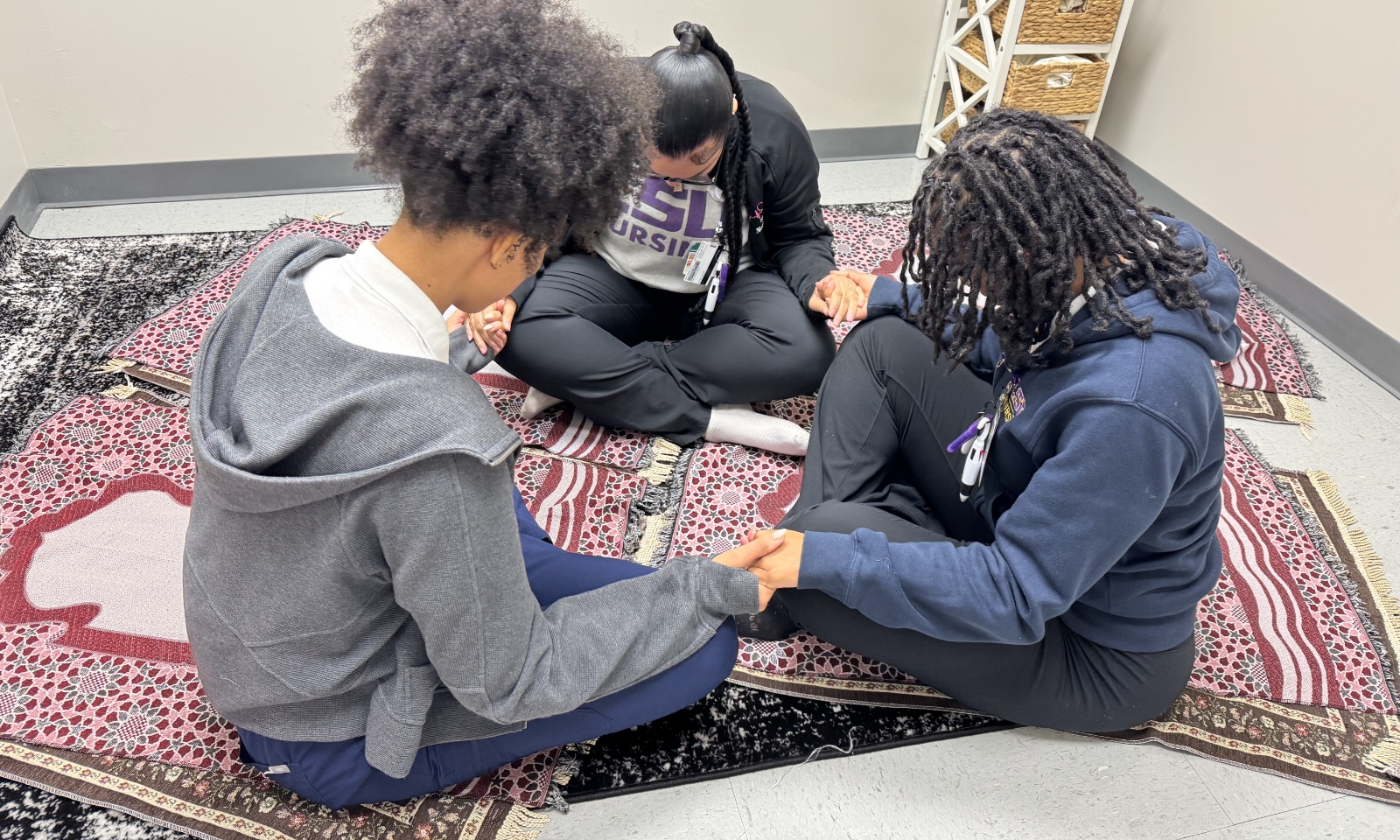
At LSU Health Sciences Center New Orleans School of Nursing, wellness is not an afterthought; it’s an essential part of preparing the next generation of nurses. Through the university’s Quality Enhancement Plan (QEP), titled “Be Well: Student Success and Wellness,” the School of Nursing is leading the way in creating an academic environment that nurtures both professional excellence and personal well-being.
“The whole person is impacted by academic success,” says Kathy Brennan, Academic Success Coordinator. “The interconnectedness of academic, mental, emotional, physical and financial health cannot be ignored.”
The Be Well initiative is rooted in two key pillars: financial health and mental health. It aims to equip students with the awareness, resources and resilience needed to thrive in nursing school and beyond.
Wellness as a Foundation for Learning
For Brennan, wellness and academic success go hand in hand.
“Academic success impacts emotional and mental health,” she says. “If academic success is negatively impacted, stress goes up, and mental health can be affected. Exercise and self-care are often the first things to go.”
Her approach as an Academic Success Coordinator is grounded in seeing students as whole people, not just learners in a classroom.
“Eat right, sleep right and exercise” might be simple advice, she says, but it’s powerful when paired with time management and goal-centered thinking.
“I remind students that sleeping is studying. Exercise helps the brain. Reducing stress allows them to more easily learn and show what they know.”
One of her favorite reminders, “time management is self-management,” reflects the coaching mindset that underpins LSU Health Sciences Center New Orleans’ academic support model. Through one-on-one sessions that include sharing time management tools and both reflective and active learning strategies, students learn not just how to study, but how to take care of themselves while studying.
Academic Success Meets Preventive Wellness
Brennan and her colleagues in the School of Nursing’s Academic Success Office encourage students to see wellness as an integral part of academic success, rather than something separate or secondary. They help students identify how sleep, exercise, social connection and mindfulness all affect learning and confidence.
“We encourage students to make counseling sessions, workouts and social time part of their weekly schedule,” she says.
When students learn evidence-based study techniques like retrieval practice, spaced repetition and the Study Cycle, they not only perform better academically but also experience less stress.
“Success itself, plus knowledge of how one achieved their success, can lead to reduced stress,” Brennan says. “Our goal is to help students shift from stress that hinders success to stress that motivates it.”
That philosophy extends beyond the classroom. As coordinator of the LCMC Health Scholars Program, Brennan helps over 90 nursing students reduce financial strain through scholarships that cover tuition and an academic support stipend. In return, scholars commit to working with LCMC Health after graduation. She says the program directly aligns with Be Well.
“When financial stress is reduced, students can focus more on learning and becoming great nurses.”
Mental Health Support That Meets Students Where They Are
The Campus Assistance Program (CAP), led by Scott M. Embley, LCSW, is another cornerstone of the School of Nursing’s wellness network. CAP provides short-term counseling, problem assessment, referrals and a 24-hour crisis line for students, faculty and staff, all at no cost.
“Feeling overwhelmed is often the very reason to reach out, not a reason to wait. Reaching out for help is a sign of strength and self-awareness, not weakness.”
— Scott M. Embley, LCSW, Director, Campus Assistance Program
Since the pandemic, the program has expanded its reach through virtual counseling, allowing the team to connect with LSUHSC community members across Louisiana.
“Virtual sessions have been particularly beneficial for our off-campus students and staff,” says Embley. “They have greatly expanded access to CAP services for the entire campus community, regardless of location.”
CAP plays an active role in advancing Be Well goals, with a focus on financial wellness and stress management. In partnership with the Financial Aid Office, CAP introduced iGrad, a financial literacy platform that helps students strengthen their money management skills, one of the key wellness pillars of the QEP.
CAP also oversees the WISE (Wellness Inventory for Students and Employees) survey, which gathers valuable feedback on wellness needs and perceptions across campus, from cafeteria options to lactation rooms.
“The insights we have gained from this feedback have been invaluable in helping us enhance our wellness offerings,” says Embley.
Expanding Access, Building a Healthier Future
In 2024, CAP received a Louisiana Board of Regents grant to further strengthen mental health support on campus.
“This funding enables us to expand in several key areas,” Embley says. “We’re increasing direct access to mental health services, enhancing outreach, providing professional development and strengthening our behavioral health service pipeline.”
These investments represent more than programmatic growth; they reflect the School of Nursing’s and LSUHSC’s commitment to long-term, evidence-based improvement.
“We’ve established an ongoing evaluation process. By analyzing the data we collect each year, we can identify what’s working and strategically build upon those successful elements while refining areas that need improvement,” he says.
When asked what he’d tell a student who feels too overwhelmed to seek help, Embley’s message is clear and compassionate:
“Feeling overwhelmed is often the very reason to reach out, not a reason to wait. Reaching out for help is a sign of strength and self-awareness, not weakness.”
A Culture of Care and Leadership
Together, programs like Be Well, CAP and Academic Success are helping School of Nursing students become not only stronger learners, but also more self-aware and resilient caregivers. By focusing on wellness as a shared responsibility of mind, body and spirit, the School of Nursing is shaping future nurses who are ready to care for others because they have learned how to care for themselves.
Through its comprehensive, compassionate approach, the school continues to set the standard for how wellness can transform education, community and the nursing profession itself.