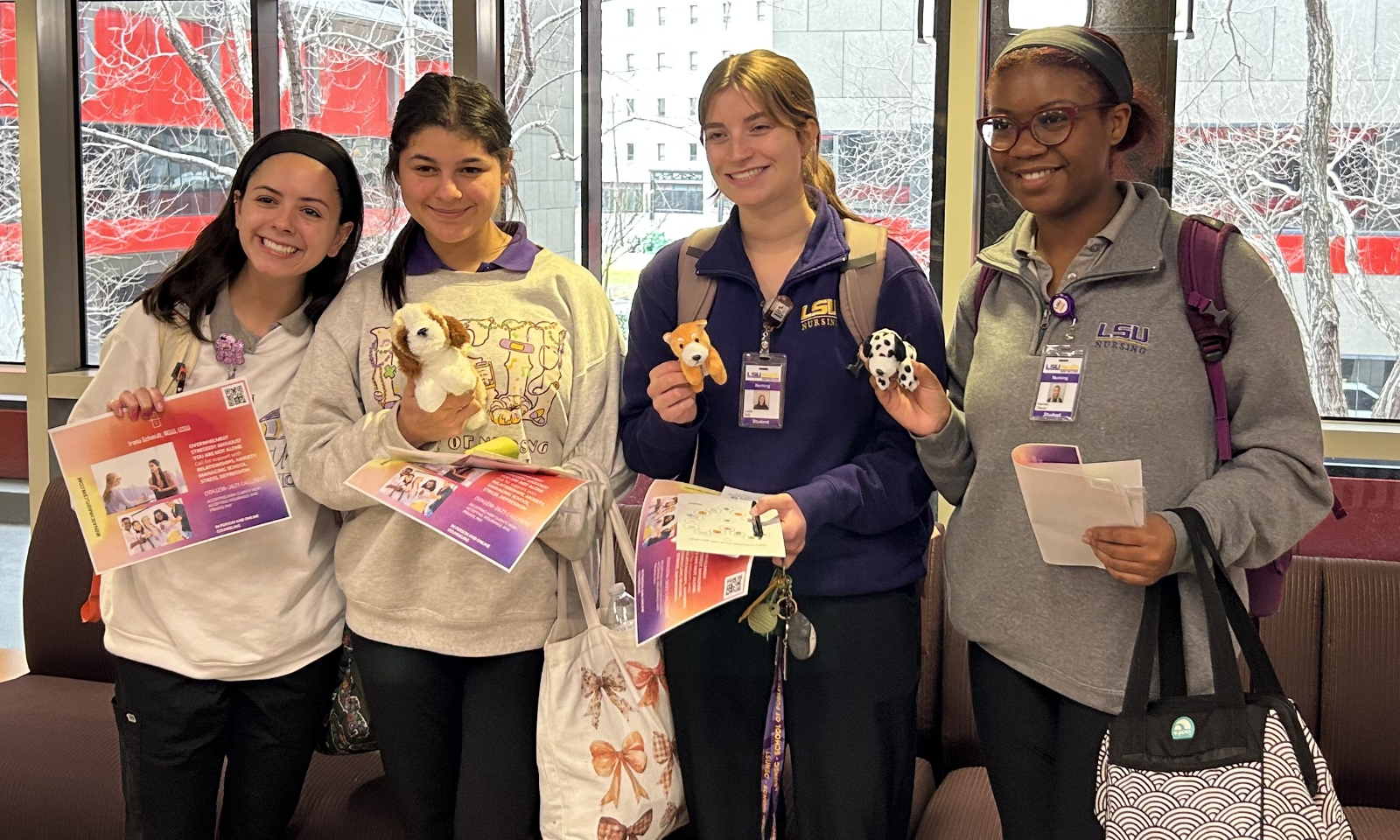
At LSU Health Sciences Center New Orleans School of Nursing, wellness is woven into everyday student life, and one of the strongest threads is the Peer Advocates for Learning and Support program. Through PALS, students uplift one another, foster connection and create a community where no one has to navigate nursing school alone.
Designed to strengthen emotional, academic and social well-being, the program empowers students to support their peers with encouragement, resources, and understanding, making wellness both a personal and a shared priority.
“I wanted to contribute to a supportive atmosphere where we can all feel encouraged and connected,” says Caroline Meginley, a Sophomore II PALS Representative. “The program strengthens mental, emotional and academic wellness by ensuring students never feel like they have to go through the process alone.”
Peer Connection Makes a Difference
Every cohort selects PALS representatives to serve as advocates, listeners and peer guides. These students check in with classmates, offer informal academic assistance, and help connect peers to campus resources like counseling, tutoring and student success coaching.
Kathleen Stamm-Kirk, a Senior I CARE student and PALS Representative, says those small check-ins can make a profound impact.
“The program strengthens mental, emotional and academic wellness by ensuring students never feel like they have to go through the process alone.”
– Caroline Meginley, Sophomore II PALS Representative
“If someone hasn’t been in class for a while, I’ll send a quick text or GroupMe message to make sure they’re OK,” she says. “Sometimes students are more comfortable opening up to a peer, and PALS reps can help bridge that connection to additional support if needed.”
Stamm-Kirk also infuses fun and levity into the cohort to help ease stress.
“For a while, we did a ‘Pet of the Week’ spotlight in our group chat, and it really helped lighten the mood,” she says. “I’ve also brought brownies or set up affirmation card tables so people could encourage one another. Little things can help remind us of our strengths.”
Changing the Narrative: From Competition to Collaboration
At the School of Nursing’s Off-Campus Instructional Site in Baton Rouge, Blaire Daigle, a Sophomore I PALS Representative, sees the program as a way to shift the culture.
“This program helps change the nursing school narrative from competitive to collaborative,” she says. “We’re all here together with the same goal in mind: to become nurses.”
Daigle supports classmates ahead of exams, shares resources from the Campus Assistance Program and looks for small ways to lift spirits.
“If we’re in a good headspace, we can focus on academics, time management, and mental and emotional wellness,” she says. “The PALS program reassures students that help is available and that it’s OK to ask for it.”
Creating a Culture of Compassion and Belonging
Through peer-to-peer connection, PALS representatives foster a learning environment rooted in empathy, trust and belonging, values that echo through the School of Nursing’s approach to holistic wellness.
“PALS doesn’t replace professional counseling or advising, but it fills in the gaps and helps connect people to the right resources,” Stamm-Kirk says. “PALS helps students feel seen, heard and less alone in a demanding program.”
By empowering students to support one another, the PALS program reinforces what nursing is all about: compassion, connection and collective resilience. These student advocates model the kind of care they will one day offer in clinical settings by listening without judgment, encouraging others, and making space for vulnerability and growth.